🇫🇷 Version française · 🇪🇸 Español
🎃 Halloween special: play the Halloween quiz →
🎄 Christmas special: play the Christmas quiz →
🎆 New Year special: play the New Year quiz →
Free Aviation quiz: 202 trivia questions and answers — pioneers, legendary planes & records. Easy to hard, with explained answers. No sign-up.
Start this quiz →🖨️ Printable version (20 questions + answers)
From the Wright brothers' first flight to the modern turbojet, this quiz traces the major milestones of aviation history. A fun way to test your aviation knowledge.
This quiz currently has 202 questions, ranging from easy to hard, available in French, English and Spanish when the Spanish translation is available.
Warm up before the quiz with these 20 trivia questions and their explained answers: click a question to reveal the answer.
Answer: damage from debris. The investigation found that a metal strip on the runway, which had fallen from a Continental Airlines DC-10 that had taken off a few minutes earlier, caused the Concorde's tire to burst, triggering a fire and the loss of two of its engines, leading to the crash and the death of all 100 passengers (96 of them German) and nine crew members, as well as four people on the ground.
Answer: Boeing 747. The historic giant of the skies.
Answer: Antonov An-225 Mriya. The Antonov An-225 Mriya (Ukrainian for "Dream") was the largest aircraft in the world in terms of maximum takeoff weight (640 tons) and payload (250 tons). Originally designed to carry the Soviet space shuttle Buran, only one example was ever built. It was destroyed on February 27, 2022 during the Russian invasion of Ukraine.
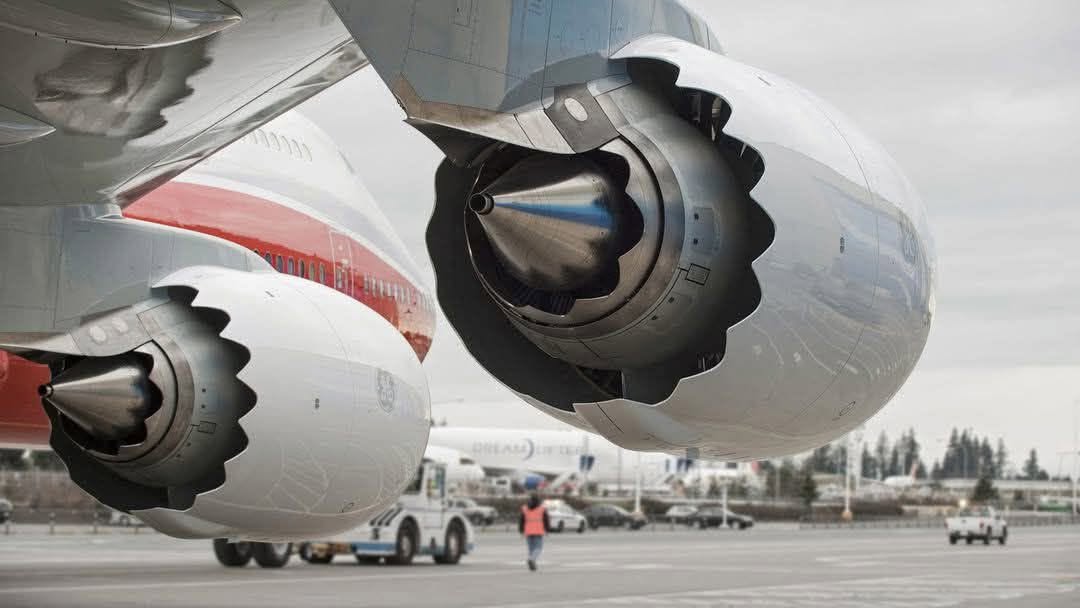
Answer: Engine power is reduced at cruise, so the blades spin slower. At takeoff, the engines run at full power (up to 100% thrust): the large-diameter fan pushes huge masses of air at high speed, producing a powerful, high-pitched noise. At cruise, power is reduced by 30 to 40%, the blades spin more slowly, and the noise drops noticeably. Distance from the ground also plays a role — residents near airports know this well.
Answer: F-14 Tomcat. The wings change angle depending on speed.
Answer: Super Guppy. The Super Guppy (built on a Boeing C-97 base) literally opens in half thanks to a hinged nose that swings open 110 degrees. It played a crucial role in the Apollo program by transporting sections of the Saturn V rocket.
Answer: it prevents mid-air collisions with other aircraft. TCAS (Traffic Collision Avoidance System) detects nearby aircraft and gives pilots voice instructions to avoid a mid-air collision.
Answer: the Supermarine Spitfire. Alongside the Hawker Hurricane, the Supermarine Spitfire, recognizable by its elliptical wings, became the symbol of British resistance during the Battle of Britain.
Answer: Antoine de Saint-Exupéry. An Aéropostale then reconnaissance pilot, Saint-Exupéry vanished on 31 July 1944 aboard a Lockheed P-38 Lightning. Wreckage of his aircraft was found off Marseille in the early 2000s.
Answer: Alpha Jet. The Patrouille de France has flown the Dassault/Dornier Alpha Jet since 1981, having previously used aircraft such as the Fouga Magister. Its eight jets trail blue, white and red smoke in the sky.
Answer: Orville Wright. On December 17, 1903 at Kitty Hawk aboard a Wright Flyer, Orville Wright made the first controlled powered flight in history: duration 12 seconds, distance 36 meters. The Wright brothers then made 4 flights that same day, the last lasting about 59 seconds. What makes this flight historic is not just the act of flying, but the control of the aircraft in flight, marking the true beginning of modern aviation.
Answer: Myasishchev VM-T. This modified aircraft carried the Soviet Buran shuttle on its back.
Answer: Avrocar. A circular Canadian project inspired by UFOs.
Answer: Convair XFY Pogo. The "Pogo" rested on its cross-shaped tail on the ground. Fitted with a turboprop driving contra-rotating propellers, it climbed like a rocket. The major problem was landing: the pilot had to look back over his shoulder to descend backward toward the ground.
Answer: Rockwell-MBB X-31. The X-31 tested thrust vectoring (three movable paddles directing the engine exhaust) to perform maneuvers beyond stall limits. This let the pilot control extreme angles of attack impossible for a conventional jet.
Answer: Raymonde de Laroche. French aviator Raymonde de Laroche obtained pilot's license No. 36 from the Aéro-Club de France on March 8, 1910, a world first for a woman.
Answer: the Heinkel He 219. In 1943, a German pilot successfully used the pneumatic ejection seat of the Heinkel He 219 night fighter, a world first in a real situation.
Answer: To reduce lift and increase drag. Spoilers "spoil" the airflow over the wing: they destroy part of the lift and add drag. In flight they help the aircraft descend or roll; on landing they deploy fully to press the aircraft onto the runway so the brakes work effectively.
Answer: Flying at 85% of the local speed of sound. The Mach number is the ratio between the aircraft's speed and the speed of sound in the surrounding air. Because the speed of sound falls with temperature, Mach 0.85 does not equal the same km/h at sea level and at 11,000 m.
Answer: Selective interrogation of each aircraft and data exchange. With Mode S, each aircraft has a unique address: radar can interrogate it individually, which reduces interference. It also transmits data such as the flight's call sign and forms the basis for ADS-B.
182 more questions are waiting for you in the quiz!