🇫🇷 Version française · 🇪🇸 Español
🎃 Halloween special: play the Halloween quiz →
🎄 Christmas special: play the Christmas quiz →
🎆 New Year special: play the New Year quiz →
Free Train quiz: 100 trivia questions and answers — locomotives, legendary lines & records. Easy to hard, with explained answers. No sign-up.
Start this quiz →🖨️ Printable version (20 questions + answers)
From the Peruvian Andes to giant American locomotives, this quiz explores the history and engineering feats of the railway world. A fun way to test your train knowledge.
This quiz currently has 100 questions, ranging from easy to hard, available in French, English and Spanish when the Spanish translation is available.
Warm up before the quiz with these 20 trivia questions and their explained answers: click a question to reveal the answer.
Answer: George Stephenson. George Stephenson designed several of the first working locomotives and helped establish the standard track gauge still used today.
Answer: The Trans-Siberian Railway. Completed in 1916, the Trans-Siberian Railway runs about 9,289 km between Moscow and Vladivostok, crossing eight time zones.
Answer: The horse-drawn stagecoach. Before the rise of the railway, the horse-drawn stagecoach was the main means of overland passenger travel, far slower and more costly.
Answer: The Uyuni train cemetery. Near Uyuni, Bolivia, old locomotives and wagons abandoned in the 20th century rust away in the open desert, now an unusual tourist attraction.
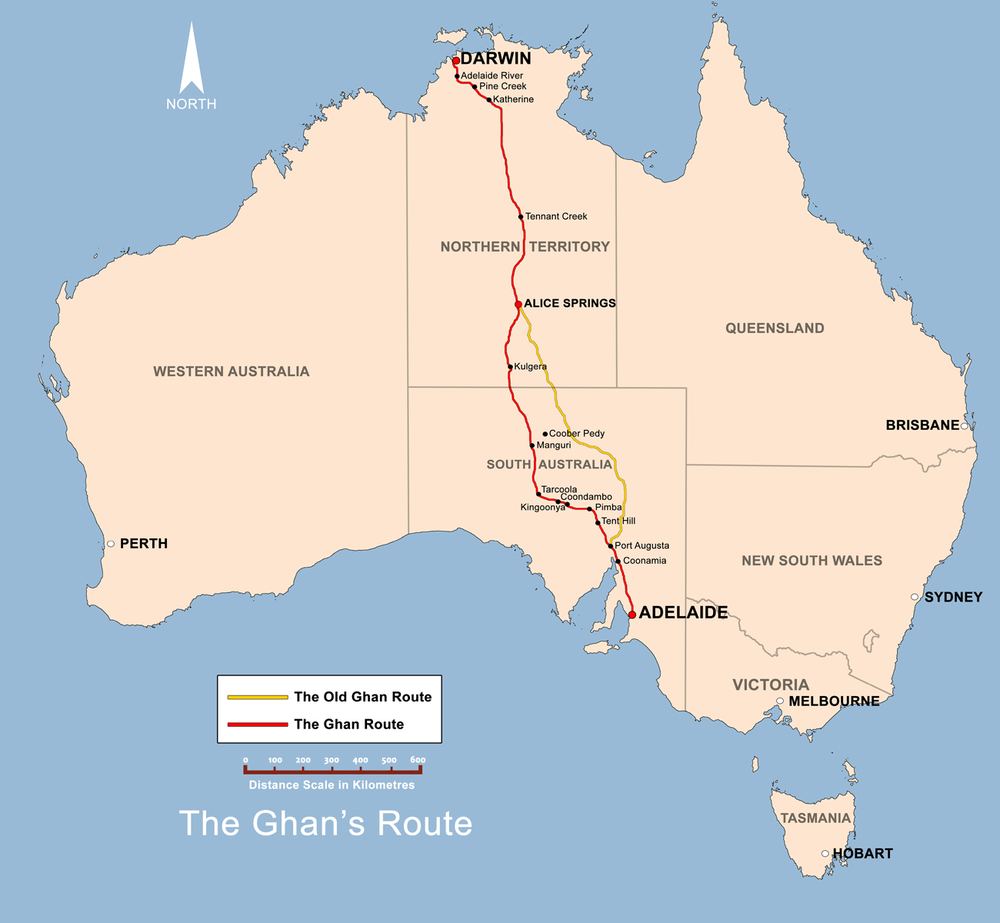
Answer: The Ghan. The Ghan links Adelaide to Darwin across roughly 2,979 km of Australian desert, one of the longest tourist rail journeys in the world.
Answer: The iron horse. Many Native American tribes nicknamed the locomotive the iron horse, struck by its strength and speed compared to that of a real horse.
Answer: Jesse James and Butch Cassidy. Jesse James and Butch Cassidy's gang (the Wild Bunch) are among the most famous outlaws who held up trains carrying gold or silver in the American West.
Answer: The catenary (overhead line). The catenary is an electric cable suspended above the tracks; the pantograph, mounted on the train's roof, presses against it to draw current.
Answer: 574.8 km/h. On April 3, 2007, a specially modified TGV set reached 574.8 km/h on a French high-speed line, a record still standing for a conventional-rail train.
Answer: Morocco. Opened in 2018, Al Boraq links Tangier to Casablanca at a top speed of 320 km/h, making Morocco the first African country with a high-speed line.
Answer: The Pen-y-darren locomotive. Built by British engineer Richard Trevithick, the Pen-y-darren locomotive ran in 1804 in Wales, hauling wagons along a mining tramway.
Answer: Union Pacific and Central Pacific. Union Pacific built westward from Nebraska while Central Pacific built eastward from California, until they met in 1869.
Answer: The White Pass and Yukon Route. Built between 1898 and 1900 to carry gold prospectors to the Klondike, the White Pass and Yukon Route crosses steep mountain passes.
Answer: The Danyang-Kunshan Grand Bridge. The Danyang-Kunshan Grand Bridge, on the Beijing-Shanghai high-speed line, stretches about 164 km, mostly across paddy fields and wetlands.
Answer: Chinese immigrant workers. Thousands of Chinese workers dug tunnels and laid track across the Sierra Nevada for the Central Pacific Railroad, often in extremely dangerous conditions.
Answer: "Boomtowns". Towns such as Abilene or Dodge City sprang up and grew rapidly thanks to the convergence of cattle trails and railway lines, becoming railway "boomtowns".
Answer: The Coradia iLint. The Coradia iLint, developed by Alstom and put into service in Germany in 2018, uses hydrogen fuel cells to generate electricity, with no direct CO2 emissions.
Answer: The third rail. The third rail, electrically powered and running alongside the running rails, feeds the train without an overhead line, a common solution on some urban networks.
Answer: The United States. With about 150,000 km of track, the United States rail network remains, in total cumulative length, the largest in the world, mostly dedicated to freight.
Answer: China. China operates the largest high-speed rail network in the world, with Fuxing Hao trainsets running in regular commercial service at up to 350 km/h.
80 more questions are waiting for you in the quiz!