🇫🇷 Version française · 🇪🇸 Español
🎃 Halloween special: play the Halloween quiz →
🎄 Christmas special: play the Christmas quiz →
🎆 New Year special: play the New Year quiz →
Free Art quiz: 94 trivia questions and answers — painters, masterpieces & movements. Easy to hard, with explained answers. No sign-up.
Start this quiz →🖨️ Printable version (20 questions + answers)
From the Bauhaus to Arte Povera, by way of Louise Bourgeois's giant spiders, this quiz explores the movements and artists who have shaped art history. A fun way to test your artistic knowledge.
This quiz currently has 94 questions, ranging from easy to hard, available in French, English and Spanish when the Spanish translation is available.
Warm up before the quiz with these 18 trivia questions and their explained answers: click a question to reveal the answer.
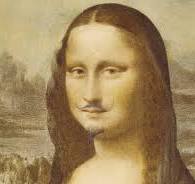
Answer: Leonardo da Vinci. The Mona Lisa, also known as La Gioconda, was painted by Leonardo da Vinci between 1503 and 1519. It is displayed at the Louvre Museum in Paris and is considered the most famous work of art in the world.
Answer: Watercolour. Watercolour uses finely ground pigments bound with gum arabic and diluted with water. Transparency is its defining characteristic, allowing the white of the paper to show through.
Answer: Musée d'Orsay. The Musée d'Orsay is housed in the former Gare d'Orsay, built in 1900. It holds the world's largest collection of Impressionist art, with works by Monet, Renoir, Degas, and Van Gogh.
Answer: Auguste Rodin. The Thinker is a sculpture by Auguste Rodin, originally created in 1880. It was initially intended to represent Dante contemplating The Divine Comedy. Numerous casts exist around the world, including one at the Musée Rodin in Paris.
Answer: Oil painting. Oil painting uses pigments bound with drying oils (linseed, walnut, poppy). Popularised by Jan van Eyck in the 15th century, it allows for glazes, transparency effects, and great colour richness.
Answer: Pierre-Auguste Renoir. Pierre-Auguste Renoir (1841–1919) is celebrated for his scenes of Parisian life and his sensuous bathers. 'Bal du Moulin de la Galette' and 'The Large Bathers' are among his most famous works.
Answer: Art Nouveau. Art Nouveau is an artistic and architectural movement from the late 19th century, characterised by organic forms, flowing plant and floral curves. Hector Guimard (Paris Métro entrances) and Victor Horta are among its leading representatives.
Answer: J.M.W. Turner. J.M.W. Turner (1775–1851) is celebrated for his seascapes and depictions of light, steam, and storms. 'Rain, Steam and Speed' (1844) anticipates Impressionism. John Ruskin was his great champion.
Answer: Collage. Collage is an artistic technique consisting of assembling elements of various materials (papers, fabrics, photographs) on a support. Picasso and Braque introduced it into painting in 1912, and it became essential to Dadaism and Surrealism.
Answer: Vincent van Gogh. The Starry Night was painted by Vincent van Gogh in June 1889 from his room at the Saint-Paul-de-Mausole asylum in Saint-Rémy-de-Provence. It is now held at the MoMA in New York.
Answer: Jan Davidsz. de Heem. Vanitas are allegorical still lifes reminding us of life's fragility, featuring skulls, candles, and wilting flowers. Jan Davidsz. de Heem was one of the leading masters of the genre in the 17th century.
Answer: Yayoi Kusama. Yayoi Kusama, a Japanese artist born in 1929, is celebrated for her obsessive polka dots and 'Infinity Rooms'. Her works reflect her hallucinations and her relationship with infinity.
Answer: Édouard Manet. 'Le Déjeuner sur l'herbe' by Édouard Manet (1863) caused a scandal at the Salon des Refusés by depicting a nude woman alongside fully clothed men. The painting marks the beginning of modern art.
Answer: Andy Warhol. Andy Warhol presented his 32 Campbell's Soup Cans canvases in 1962, which became one of the founding works of Pop Art. Each canvas depicted a different variety of soup, reproduced with the precision of an industrial print.
Answer: Salvador Dalí. 'The Persistence of Memory' (1931) by Salvador Dalí is the most famous Surrealist work. The melting watches evoke the relativity of time and the dream state. It is held at the MoMA in New York.
Answer: Sandro Botticelli. 'The Birth of Venus' (c. 1485) by Sandro Botticelli depicts the goddess Venus emerging from the sea on a shell. It is displayed at the Uffizi in Florence and is one of the iconic works of the Italian Renaissance.
Answer: Hokusai. 'The Great Wave off Kanagawa' is a woodblock print by Katsushika Hokusai (1831), from his series '36 Views of Mount Fuji'. This image has become one of the most reproduced and recognised works of art in the world.
Answer: Di sotto in sù. Di sotto in sù (seen from below upwards) is an illusionistic perspective technique used for painted ceilings. Andrea Mantegna's Camera degli Sposi in Mantua (1474) is an early and celebrated example.
76 more questions are waiting for you in the quiz!